What Music looks like at St Laurence
At St Laurence, our Music curriculum gives every child the opportunity to sing, listen, compose, perform and develop a lasting appreciation of music.
Children explore music from different periods, traditions, cultures and genres. They learn about significant composers, performers and musicians from the past and present while developing their own creativity, confidence and musical understanding.
We use Charanga to support the planning and teaching of Music. The curriculum is carefully sequenced so that children revisit and develop their knowledge and skills as they progress through Key Stage 2.
Our curriculum aims
Through our Music curriculum, children will:
• enjoy listening to and making music
• sing confidently, expressively and with increasing control
• perform using their voices and a range of instruments
• improvise and compose their own music
• listen carefully and respond to different musical styles
• develop an understanding of rhythm, pitch, tempo, dynamics, texture and structure
• use appropriate musical vocabulary
• learn about significant composers, performers and musical traditions
• develop confidence, creativity and teamwork
.png)
How we teach Music
Music is taught through practical and engaging lessons using Charanga. Children listen, sing, play, improvise, compose and perform during each unit. Lessons provide opportunities for children to:
• learn and perform songs
• play tuned and untuned instruments
• follow rhythms and musical notation
• improvise short musical ideas
• compose individually and collaboratively
• listen to and appraise a wide range of music
• rehearse and refine performances
• discuss music using appropriate vocabulary
Children explore a broad range of musical styles and genres, including rock, pop, hip-hop and Motown. They use instruments such as glockenspiels, xylophones, recorders, keyboards and ocarinas during their lessons.
What children learn
Throughout Key Stage 2, children develop their knowledge and confidence across the main areas of Music.
• Singing
• Listening and appraising
• Performing
• Improvising
• Composing
• Musical notation
Learning an instrument
Throughout their time at St Laurence, children have opportunities to learn and perform using a range of instruments.
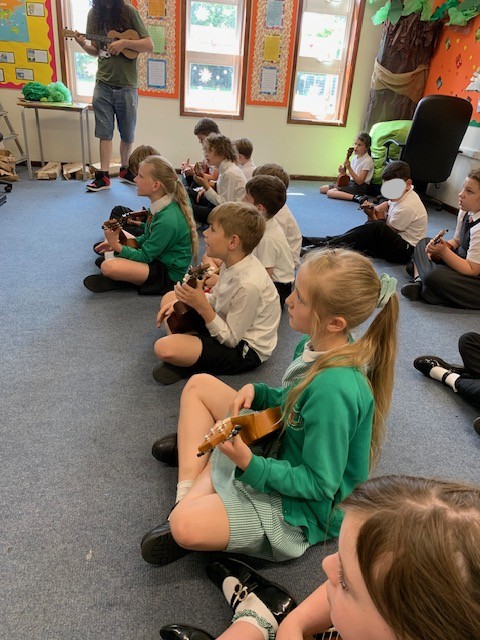
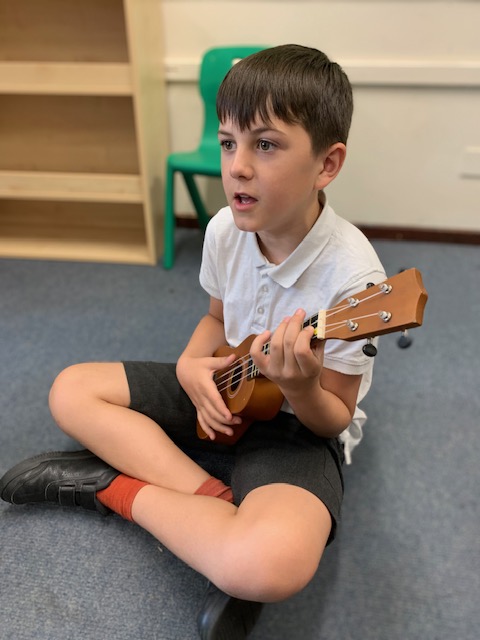
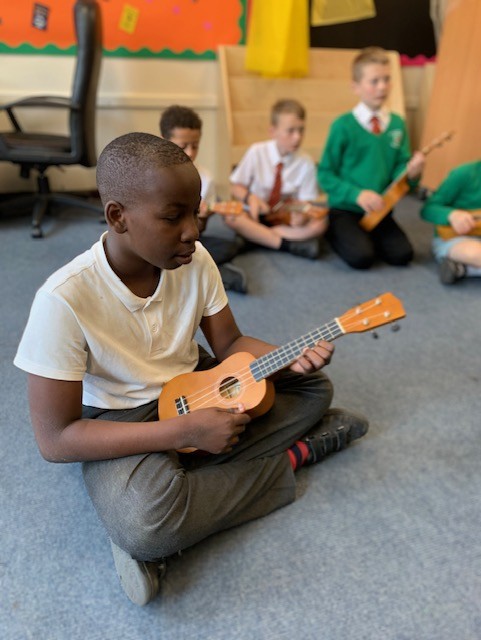
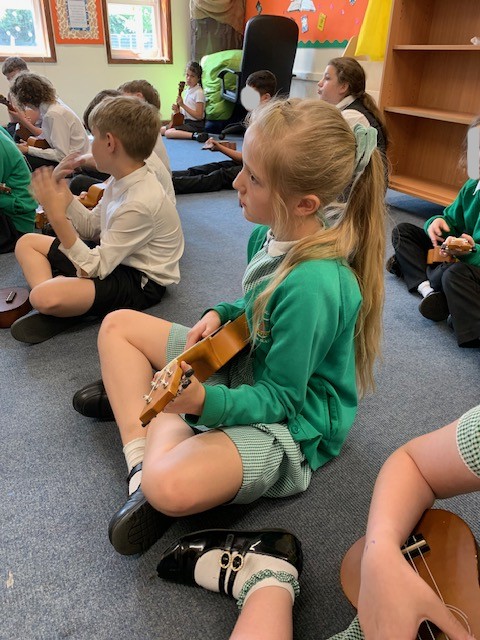
Children in Years 3 and 5 receive weekly ukulele lessons from a specialist music teacher. These lessons help pupils develop instrumental technique, rhythm, musical notation and ensemble skills. Our aim is for every child to have the opportunity to learn at least one musical instrument during their time at the school.
By the end of Year 6
By the end of Key Stage 2, children will be able to:
• sing with increasing accuracy, confidence and expression
• maintain their part when performing with others
• play a range of instruments with increasing control
• listen attentively and identify important musical features
• use musical vocabulary to describe and compare music
• improvise within a given structure
• compose and refine their own musical ideas
• use and interpret simple musical notation
• discuss music from different periods, genres and cultures
• rehearse, perform and evaluate their work
• contribute confidently and respectfully to an ensemble
Enrichment and wider opportunities
Music is an important part of life at St Laurence and children are given opportunities to perform beyond their usual lessons.
Year 4 pupils take part in Young Voices at the O2 Arena in London. This memorable experience gives children the opportunity to sing and perform as part of a large choir, developing their confidence, teamwork and enjoyment of music.
Additional musical opportunities include:
• choir
• guitar club
• performances in school
• collective worship and celebrations
• specialist instrumental tuition
• individual music lessons
• opportunities to perform to families and the wider community
These experiences allow children to develop their skills, celebrate their achievements and experience the enjoyment of making music with others.
Supporting all learners
Our Music curriculum is adapted so that every child can participate, make progress and experience success.
Teachers may use visual prompts, repeated listening, simplified instrumental parts, colour-coded notation, modelling and opportunities for additional rehearsal. Children can contribute through singing, playing, composing, listening or responding in different ways.
Instruments and activities can be adapted to meet children’s physical, sensory and communication needs while maintaining ambitious expectations for all.
Personal and spiritual development
Music gives children opportunities to experience joy, wonder, reflection and a sense of belonging.
Listening to and performing music can help pupils express emotions, consider experiences beyond their own and appreciate beauty and creativity. Exploring music from different cultures and traditions also develops respect and curiosity about the wider world.
Performing together teaches children to listen carefully, value the contribution of others and understand that each person plays an important part in creating something meaningful.
Click here to view the St. Laurence Music Curriculum Booklet